



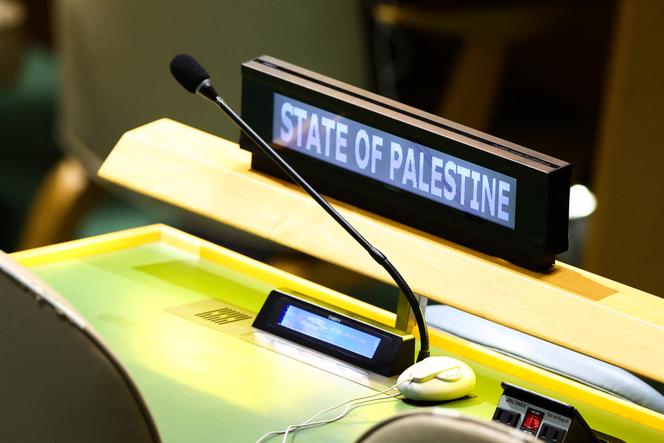
The recognition of the State of Palestine by 11 Western countries, including France, the United Kingdom, Canada, Australia, Portugal and Belgium, at the end of September, has once again raised the question of the path toward Palestinian sovereignty. While Palestinian statehood is now recognized by 158 of the 193 United Nations member states, it still only exists on paper. Donald Trump’s 20-point Gaza peace plan, which was revealed on September 29, refers to a Palestinian state as “the aspiration of the Palestinian people,” but also as a far-off goal. What different forms could a Palestinian state take?
The two-state solution
The two-state solution, in which an independent State of Palestine coexists alongside the State of Israel, remains the option preferred by diplomats. They refer to the 1947 partition plan (United Nations General Assembly Resolution 181, section II), which led to Israel’s independence and the 1948 war. They also cite UN Security Council Resolution 242, which enshrines the inadmissibility of Israel acquiring occupied Palestinian territories (the West Bank, Gaza and East Jerusalem) following the 1967 war. These documents have formed the basis of all diplomatic attempts to settle the conflict to this day.
You have 87.79% of this article left to read. The rest is for subscribers only.
Fonte: Le Monde