


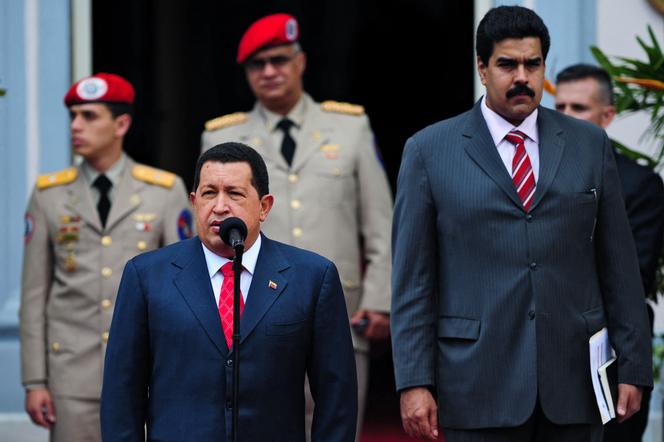
The US military attack on Caracas on Saturday – and reported capture of President Nicolas Maduro – caps years of tensions between Washington and Venezuela, which started in 2006 with US sanctions.
2006: First sanctions
Relations between Washington and Venezuela plummeted following the 1999 arrival in power of President Hugo Chavez, Latin America’s leftist firebrand. In 2006, the United States under President George W. Bush banned the sale of weapons and US-made military equipment to Venezuela, citing a lack of cooperation in the fight against terrorism. By 2010, the two countries no longer had ambassadors in each other’s capital.
2014: Accusations of human rights violations
After Chavez died in 2013 following a battle with cancer and his handpicked successor Nicolas Maduro took over, the US administration of Barack Obama imposed in late 2014 and early 2015 sanctions on several top Venezuelan officials, freezing their US assets and banning visas. Washington accused Venezuela of rights breaches in its violent crackdown on demonstrations against Maduro.
2017: Trump raises ‘military option’
The first adminstration of Donald Trump in 2017 slapped financial sanctions on several top officials, including members of the supreme court, for having undermined the powers of the parliament. The legislative body had been under the control of the opposition since late 2015. After Maduro created a Constituent Assembly to override the parliament, Washington imposed sanctions on him, freezing his assets in the US.
Trump for the first time spoke of a “military option” in Venezuela, a threat he would go on to repeat over the coming years. Washington banned the purchase of bonds issued by the Venezuelan government and by the national oil company PDVSA.
2019: Sanctions toughened
After Maduro’s re-election, which Washington and other capitals considered a sham, Trump in 2019 toughened economic sanctions with the aim of strangling the country and ousting Maduro. Caracas severed diplomatic relations after the US, followed by dozens of other countries, recognized opposition leader Juan Guaido as interim president. Guaido’s self-proclaimed government was dissolved in 2023.
Washington also imposed sanctions on oil company PDVSA and Venezuela’s central bank.
2019: Oil embargo
On April 28, 2019, Washington slapped an oil embargo on Venezuela. It then froze all Venezuelan government assets in the US. The oil embargo was slightly eased in 2023 to compensate for a shortfall of Russian crude after the invasion of Ukraine. It was reinstated when Washington said that Maduro was not meeting his commitment to hold a fair presidential election in 2024, with opposition leader Maria Corina Machado – a future Nobel Peace laureate – declared ineligible.
At the beginning of his second term in early 2025, Trump put a stop to the oil licences that allowed oil and gas multinationals to operate in Venezuela despite the sanctions. US company Chevron was allowed to operate anew in July, but was no longer allowed to give money to the Venezuelan government.
2020: $50 million bounty for Maduro
In 2020, Maduro and several of his entourage were charged in the US with “narco-terrorism,” with Washington offering a reward of $15 million for any information leading to his arrest. In August 2025, it raised the reward to $50 million. Washington accused Maduro of leading the so-called “Cartel of the Suns,” whose existence remains to be proved, according to experts.
2025: Airstrikes
August 2025 signaled the start of a massive US military build-up in the Caribbean, where Washington has since September been carrying out deadly airstrikes on boats it alleges are used by drug traffickers, accusing Caracas of being behind drugs flooding into the US. On Wednesday, December 10, the US says it had seized an oil tanker off Venezuela’s coast. Caracas accused Washington of international piracy. Trump on December 29 said his forces hit and destroyed a docking area on Venezuela’s coast that he alleged was used by drug boats – the first known land strike in the US military campaign.
2026: Caracas attacked, Maduro grabbed
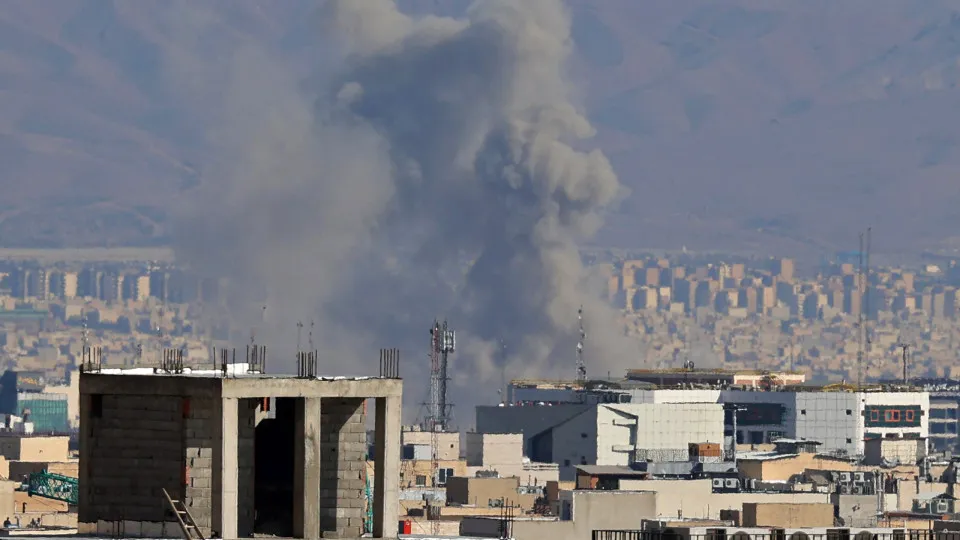
On January 3, the US conducted a wave of airstrikes on and around Caracas and Trump declared that his military had captured Maduro and his wife and flown them out of Venezuela. The Venezuelan government accused the US of an “extremely serious military aggression” and called for an emergency meeting of the UN Security Council.
Fonte: Le Monde