

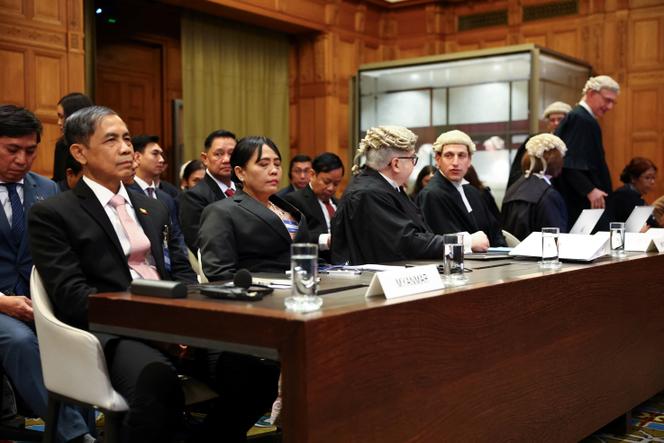
Since January 12, the International Court of Justice (ICJ) has been immersed in the accounts of massacres targeting the Rohingya Muslim minority. The proceedings were initiated in 2019 by The Gambia, supported by the Organisation of Islamic Cooperation (OIC), which brought the matter before the UN’s highest court, accusing Myanmar of violating the Convention on the Prevention and Punishment of the Crime of Genocide.
During these hearings, lawyers for The Gambia described in detail to the fourteen judges what their country characterized as an ethnic cleansing operation carried out by the Myanmar army during the summer of 2017, in retaliation for attacks by the Arakan Rohingya Salvation Army (ARSA), an extremist group defending the long-persecuted Muslim minority. It was a “counterterrorism operation,” Myanmar argued. “A genocide,” countered The Gambia, whose lawyers detailed the treatment inflicted by the Tatmadaw, the Myanmar military, on women and children, as evidence of “intent” to destroy the Rohingya group. For four days, the monumental courtroom of the Peace Palace in The Hague, where the Court sits, echoed with words such as “mutilations,” “dismemberments,” and “beheadings.”
You have 79.99% of this article left to read. The rest is for subscribers only.
Fonte: Le Monde