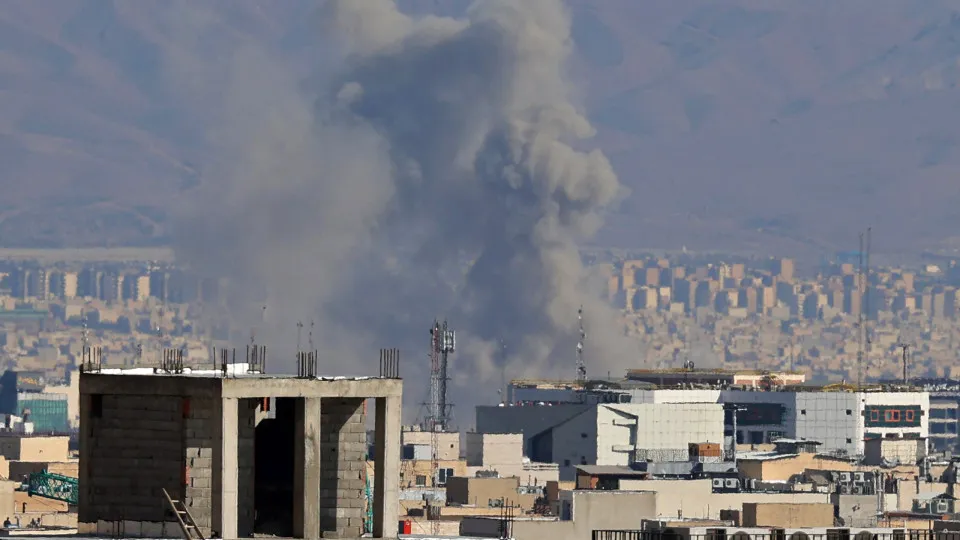



Ever since the traumatic episode when, during the early days of the 1979 Islamic Revolution, 52 US embassy staff were held hostage in Tehran for 444 days, American public opinion has consistently viewed Iran as the ultimate rogue state. Given this context, the low level of public support, as measured by several convergent polls, for the massive attack on the Iranian regime, which Donald Trump decided on in coordination with Israel, is all the more surprising. It serves as a warning for the US president.
Trump only has himself to blame. He has proven unable to explain why he chose to go to war in a convincing and consistent manner. He has put forward an increasing number of justifications, at the risk of making incoherent and false statements, such as his reference to “imminent threats,” which were never substantiated, in the hours that followed the initial bombings against the Iranian regime. Moreover, having spent years condemning his predecessors’ Middle Eastern adventurism, Trump should have known better than anyone that an effort to prepare public opinion for a war would be essential.
On the ground, the US military still enjoys overwhelming superiority, limiting the impact of Iranian retaliation, but it faces a resilient adversary. The Iranian regime had been irrevocably delegitimized by its bloody crackdown on the population’s most recent uprising, with Iranians paying the price for the regime’s decades of fatal strategic choices. Now, shaken by the assassination of Iranian Supreme Leader Ali Khamenei, the regime seeks to spread the conflict across the region, in an attempt to weaken Washington. The global economy has already been affected by the war, and the consequences will only worsen if the conflict gets bogged down.
Uncertainty in Washington
The Iranian regime, which is hated within its own borders and now sows chaos in its neighborhood, is not guaranteed to achieve its goals. The cumulative effect of the intense strikes is producing attrition, which should not be underestimated. Yet the attack on Iran has also revealed the consequences of Trump’s exercise of power, ever since his return to the White House in January 2025.
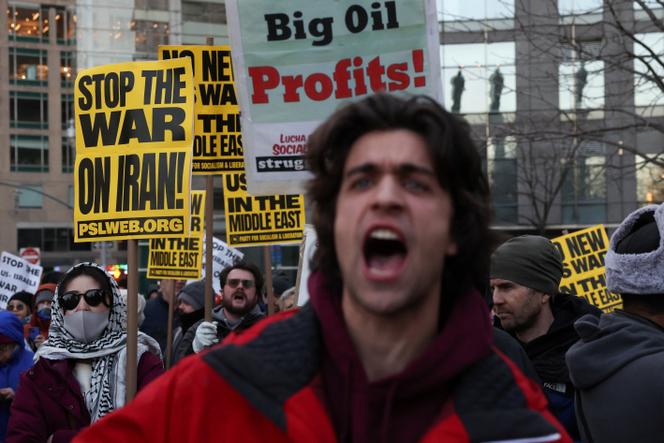
The extreme politicization of the military, which Trump entrusted to an ideologue, Pete Hegseth, who was solely selected for his loyalty, has undermined the Pentagon’s credibility, though this is crucial in times of war. The decision to entrust delicate diplomatic negotiations to the president’s close associates, rather than experienced diplomats – many of whom were pushed out of the State Department when Trump returned to power, for purely ideological reasons – has further contributed to the sense of uncertainty that prevails in Washington.
This “fog of war,” which weighs heavily on the current administration, has rekindled accusations, levied by the most isolationist factions of Trump’s base, that the US government was solely waging war to benefit Israel. These criticisms had already surfaced – often virulently – during the 12-Day War against Iran, which was launched by Israel and later joined by Washington in June 2025. They are now a significant risk for Trump, a man who was elected and then re-elected on the promise of “America First.”
Fonte: Le Monde