



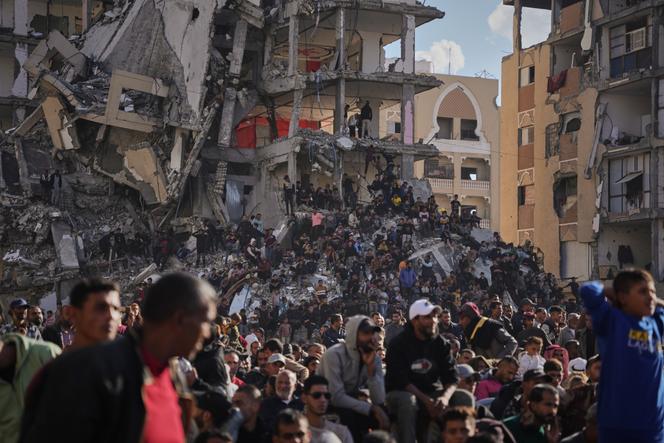
The history of Khan Yunis is not measured in millennia, as with Gaza City or Rafah, but in centuries. Before the ongoing Israeli campaign, its governorate had a population of about 400,000. In 1387, Emir Yunes El-Nowruzi founded a caravanserai there – a “khan” bearing his name. At that time, the Gaza region was a strategic crossroads favored by the Mamluk sultans who ruled Egypt and Syria.
Khan Yunis was chosen for its water resources, fertile soil and proximity to quarries. It quickly flourished as a commercial hub and postal station, protected by a garrison that deterred Bedouin incursions. This prosperity continued during the Ottoman era, beginning in 1517, contributing to the decline of Rafah, a city then on the edge of Egypt’s Sinai Desert.
The impact of wars
Khan Yunis’s influence was evident in the 17th and 18th centuries, but it waned as the port of Gaza rose in importance as an outlet for exporting local grains to Alexandria, Egypt’s largest port. When the French traveler Victor Guérin visited Khan Yunis in 1863, he noted “the fruit trees, and especially the apricot trees.” He estimated the population at about 1,000, describing “this village, once much more populous, as shown by a hundred now-ruined houses.” Later Ottoman censuses, however, recorded a population of several thousand, likely due to policies encouraging the sedentarization of Bedouins, which also led to the founding of the city of Beersheba in the neighboring Negev Desert in 1899.
You have 69.28% of this article left to read. The rest is for subscribers only.
Fonte: Le Monde