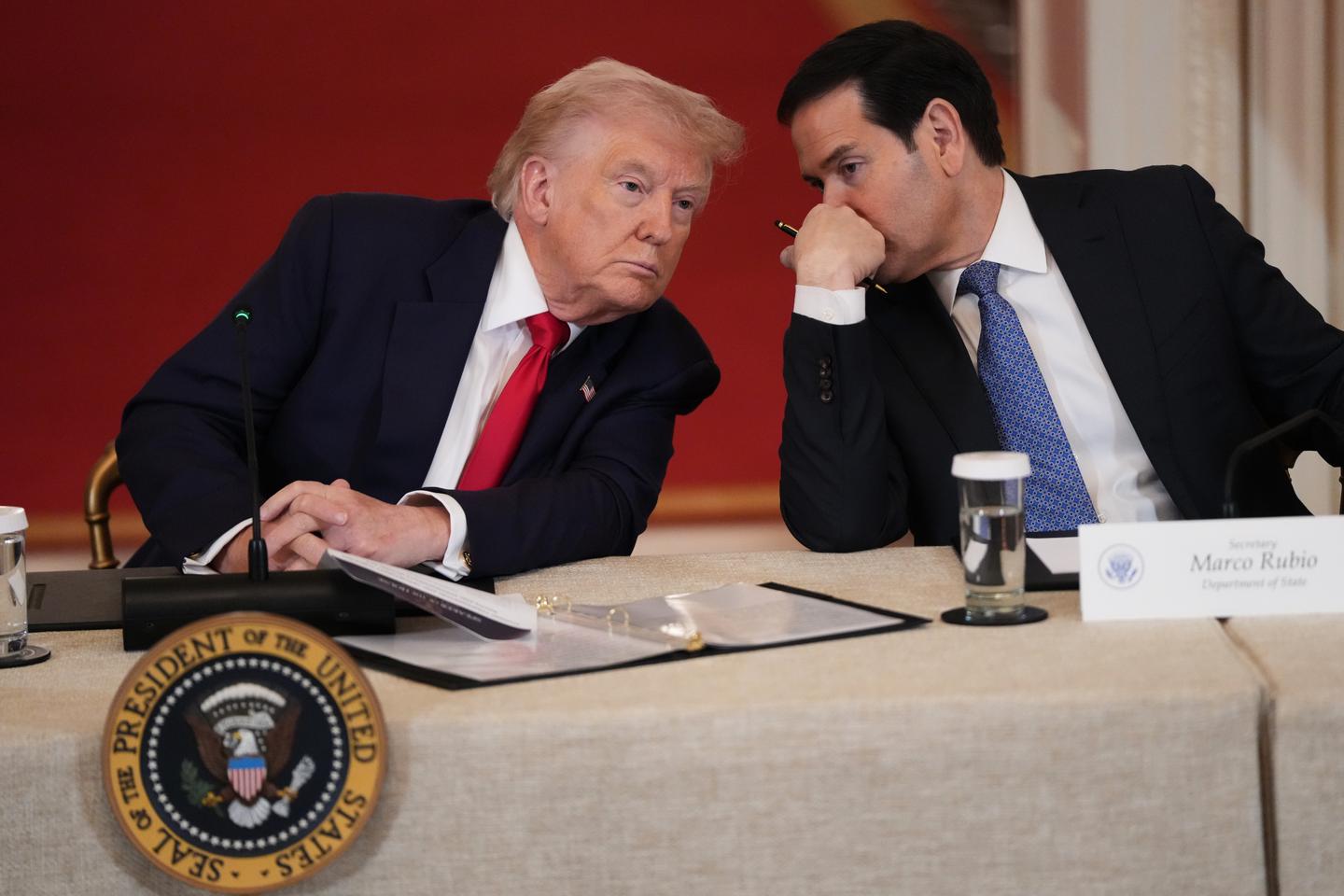



The operation that led to the abduction of Nicolas Maduro fits into the long history of US foreign policy in Latin America. Donald Trump dispensed with the usual humanitarian veneer that typically accompanies American interventionism. But the real surprise lay in the fact that this intervention contradicted some of the ideas held by the Trumpist movement. That movement has been divided over the assertion of an openly imperial ambition by the president.
A significant number of intellectuals who praised Trump’s electoral victories are backers of isolationism. This doctrine holds that the US should refuse to play an active role in world affairs. According to its proponents, foreign policy should be limited to defending the borders, especially against immigration.
This isolationism has deep roots in American political tradition. John C. Calhoun (1782 – 1850), the seventh vice president and a key theorist of Southern ideology, is its historical figurehead. Calhoun, who was opposed to a strong federal government, justified maintaining slavery in Southern states by asserting that they could legally refuse to apply federal laws adopted by the majority in the North.
Calhoun therefore opposed the Mexican-American War (1846-1848), which resulted in the forced cession of territories that today form the southwestern US. His opposition rested on two arguments: that territorial expansion risked turning the Union into an imperial power, and “the incorporation of Mexico” would threaten “the government of the white race.” This anti-imperialism was based on the idea that it was impossible to pursue an interventionist policy while maintaining a political order founded on white supremacy.
After the Civil War, this approach remained a touchstone for the Old Right, a branch of the American conservative movement known for its opposition to US intervention in both world wars. It was gradually marginalized politically before being supplanted by a neoconservative right wing that favored an aggressive foreign policy in the name of anti-communist struggle. With the end of the Cold War, the isolationist mantle was taken up by the paleoconservative movement, which saw Trump’s election as a break with a century of interventionism. In 2016, Paul Gottfried, an intellectual leader of paleoconservatism, hoped that Trump would put an end to the “global crusade to impose ‘democratic values.'”
You have 58.48% of this article left to read. The rest is for subscribers only.
Fonte: Le Monde