


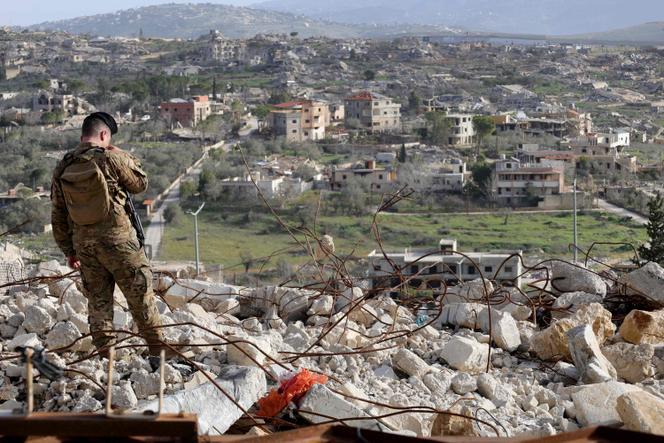
Riad Al-Assaad, a 67-year-old construction entrepreneur, is an engineer and infrastructure specialist. He divides his time between Beirut and his home village of Zrariyé, near Tyre, southern Lebanon. As part of a project with the American University of Beirut, he contributes to research on recycling the debris generated by the war between Israel and the Shiite militant group Hezbollah, from September 23, 2024, to November 27, 2024.
Active in politics, he has repeatedly run as an independent candidate in legislative elections. In his youth, like many Lebanese of his generation, he took up arms against the Israeli occupation of southern Lebanon, serving for four years (1983-1987) in the Shiite militia Amal before breaking with the group. He shares his account of the situation in the south, which continues to be bombarded at regular intervals by the Israeli army despite the nominal ceasefire declared at the end of November 2024.
What is the mood among residents in the south?
They are exhausted and anxious because the future is so uncertain. They are living in a state of “phoney war”; there is neither peace nor full-scale conflict. People know they might be killed or lose their homes at any moment [the Israeli army claims to target Hezbollah, but the United Nations has recorded at least 130 civilian deaths in Lebanon since the ceasefire]. At the same time, they try to lead normal lives. In addition, between 100,000 and 120,000 residents of the border region remain displaced from their villages.
You have 73.71% of this article left to read. The rest is for subscribers only.
Fonte: Le Monde