


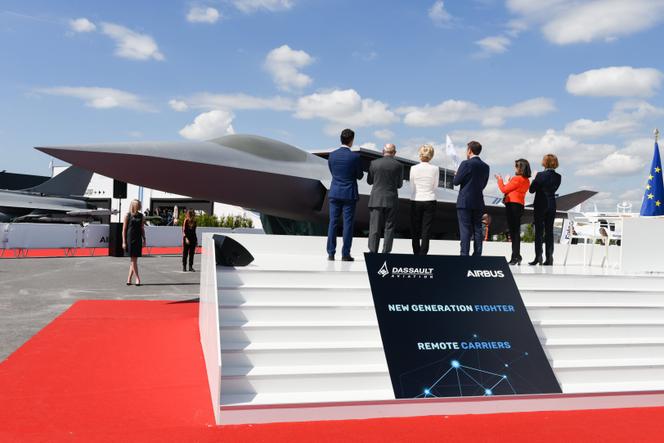
When the project was announced on July 13, 2017, it was presented as the affirmation of an “efficient and ambitious” French-German partnership, championed by Emmanuel Macron, newly elected president, and then German chancellor Angela Merkel. Less than nine years later, it has instead become a symbol of the growing rift between the two countries over defense issues. Although it has not officially been abandoned, the Future Combat Air System (FCAS) has come to a standstill. With a projected budget of nearly €100 billion, it would have been the largest industrial cooperation project ever launched in Europe.
Paris, Berlin and Madrid have yet to agree on how to build the next-generation fighter jet. The aircraft is at the core of the FCAS and is supported by six other components, including the engine, tactical cloud, sensors, combat drones, stealth technology and overall system coherence. This stalemate comes despite two years of engineering work and lengthy intergovernmental negotiations, as well as several billion euros already spent. France budgeted €1.2 billion in new commitments for 2026. These pillars are also divided among various companies from the three countries, including France’s Safran and Thales, Spain’s Indra and Germany’s MTU.
You have 79.9% of this article left to read. The rest is for subscribers only.
Fonte: Le Monde