


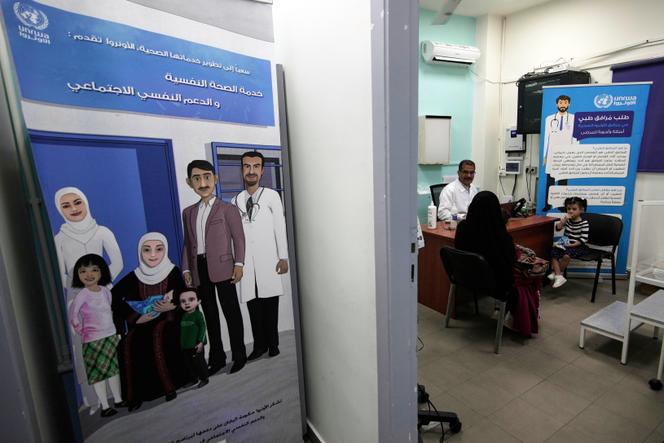
Every day has seen hustle and bustle at the United Nations Relief and Works Agency for Palestine Refugees (UNRWA) main health center serving the Beirut area, located in the suburban Bir Hassan neighborhood. Two elderly Palestinian women, Majida and Imane (who did not wish to share their full names), waited their turn at the counter in the center’s overwhelmed pharmacy to collect their medicine. One suffers from high blood pressure, the other from heart problems. Upstairs, a child cried in a patient waiting room. The boy, Ahmad, was waiting for a transfer: He was due for an operation in a hospital after a kidney infection, which the UN agency would cover.
The everyday pressure felt in the center was nothing new, but Nadine Abou Lebdeh, a general practitioner, had noticed it growing since February 1: The clinic is now only open four days a week instead of five. This cut was part of several drastic measures UNRWA had recently taken, as it had run short of funds. “We have less time for patients,” the doctor said. “Yet this place is a lifeline for Palestinian refugees: They can get free, quality care here. The services we provide are vital. Many cannot afford treatment elsewhere.”
You have 79.84% of this article left to read. The rest is for subscribers only.
Fonte: Le Monde