



United States President Donald Trump called the meeting on Thursday, October 30, with China’s Xi Jinping a “great success,” after the world’s top two economies agreed a deal to trim fentanyl-related tariffs and keep supplies of critical rare earths flowing. There was no immediate comment from the Chinese government after what was the leaders’ first face-to-face meeting since 2019 and a key point in their trade battle that has rattled markets and snarled supply chains.
Before they sat down for the one hour and 40 minute meeting, there was a rough idea of the agenda, including tariffs, computer chips, rare earth minerals and other points of tension. Before the meeting, Trump repeatedly said he expected to be able to reach a deal with Xi.
“I thought it was an amazing meeting,” Trump said after the talks in Busan, South Korea, praising Xi as a “tremendous leader of a very powerful country” and saying he would visit China in April. “I’ll be going to China in April and he’ll be coming here sometime after that, whether it’s in Florida, Palm Beach or Washington, DC,” Trump told reporters on Air Force One. He also said a dispute between China and the United States had been “settled.”
Trump added that the deal included China immediately buying “tremendous amounts of soybeans and other farm products,” a key issue for Trump’s support in farm country and a point of leverage for Beijing. “We’re in agreement on so many elements (…) tremendous amounts of soybeans and other farm products are going to be purchased immediately,” Trump told reporters.
“On fentanyl, we agreed that he was going to work very hard to stop the flow (…) I put a 20% tariff on China because of the fentanyl coming in (…) and based on his statements today I am going to reduce that by 10%,” Trump also said.
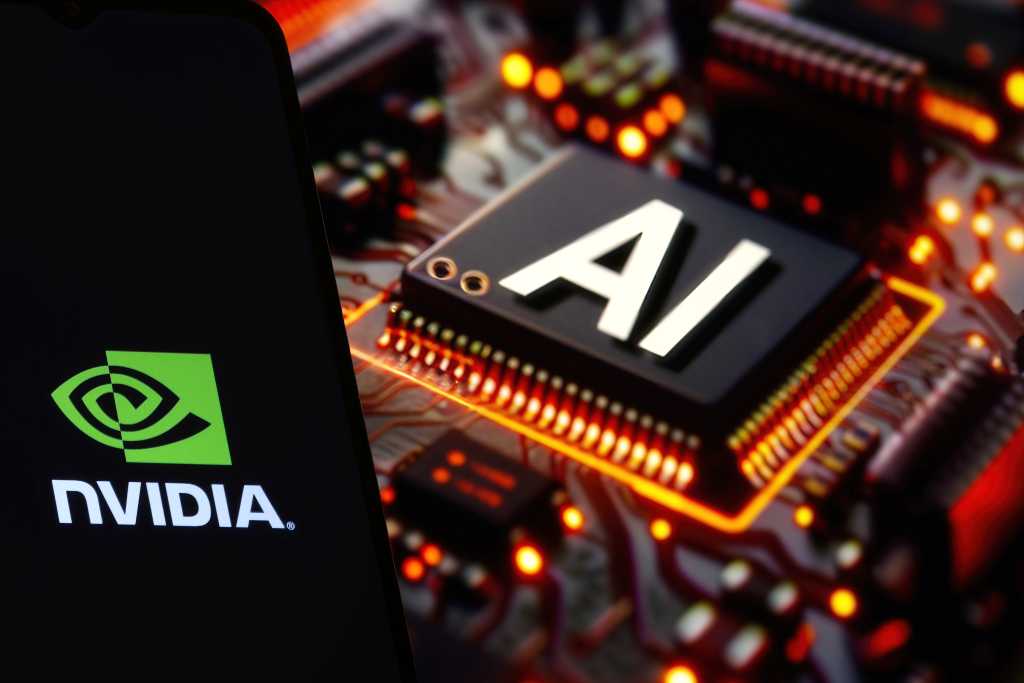
The meeting also featured talk about semiconductors, another source of tension between the US and China. “We did discuss chips,” Trump said after meeting Xi, adding that Nvidia’s CEO would speak to Beijing about chips. “We’re sort of the arbitrator or the referee,” Trump said.
Rare earths deal
Trump’s aggressive use of tariffs since returning to the White House for a second term combined with China’s retaliatory limits on exports of rare earth elements have given the meeting newfound urgency. There is a mutual recognition that neither side wants to risk blowing up the world economy in ways that could jeopardize their own country’s fortunes.
The US leader said the talks yielded an extendable one-year deal on China’s supply of crucial rare earths, materials that are essential for sophisticated electronic components across a range of industries. “All the rare earths has been settled, and that’s for the world,” Trump told reporters, aboard Air Force One.
Beijing had announced additional controls on the export of rare earths, a sector where China is hugely dominant, in early October.
During his Asia tour, Trump also signed a deal with Japan securing supplies of critical minerals and rare earths. “There’s no roadblock at all on rare earths – that will hopefully disappear from our vocabulary for a little while,” he said.
Xi said ‘consensus’ on trade reached
On Thursday, Xi told Trump that the two countries “should have positive interactions on the regional and international stage,” Chinese state news agency Xinhua reported. Xi said that teams from both sides had “exchanged in-depth views on important economic and trade issues and reached a consensus on resolving them,” according to the Xinhua readout, which offered no details on specific agreements reached. “Both teams should refine and finalize follow-up work as soon as possible, maintain and implement the consensus and provide tangible results to set minds at ease about the economies of China, the United States and the world,” he added.
Taiwan not discussed, but working together on Ukraine
Trump said Thursday that Taiwan was not discussed in his meeting with Xi. Taiwan “never came up. That was not discussed actually,” Trump said on Air Force One after meeting Xi in South Korea.
Trump also said Thursday that he and Xi had agreed to “work together” on the issue of Ukraine. “Ukraine came up very strongly. We talked about it for a long time, and we’re both going to work together to see if we can get something,” he told reporters. Xi is “going to help us, and we’re going to work together on Ukraine,” Trump said.
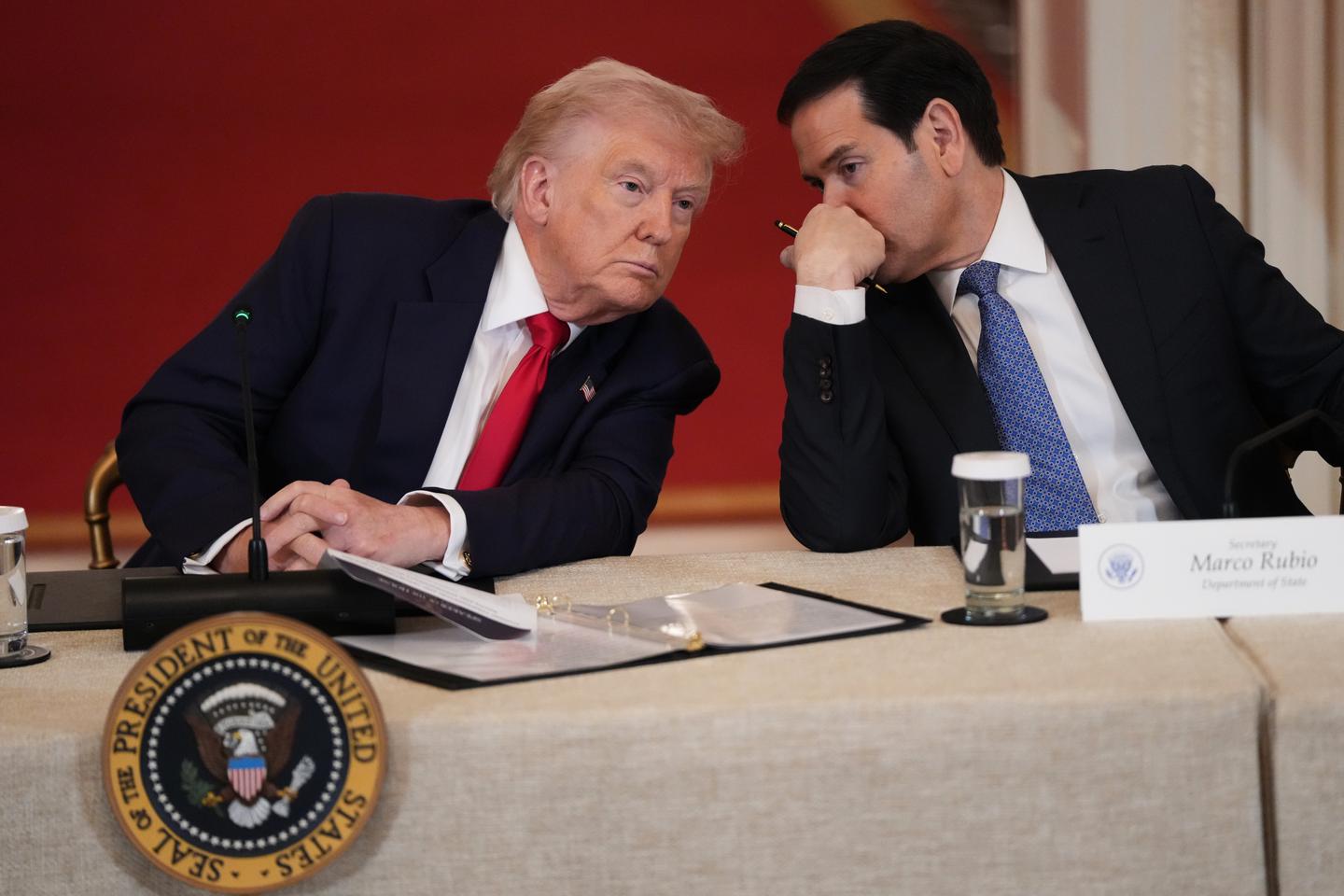
Accompanying Trump were Trade Representative Jamieson Greer, Commerce Secretary Howard Lutnick, Secretary of State Marco Rubio, Treasury Secretary Scott Bessent, White House Chief of Staff Susie Wiles and David Perdue, the US ambassador to China.
Trump announces nuclear tests
Minutes before meeting Xi, Trump wrote on Truth Social that “because of other countries testing programs, I have instructed the Department of War to start testing our Nuclear Weapons on an equal basis.”
The comments came a day after Russian President Vladimir Putin said Moscow had successfully tested a nuclear-capable, nuclear-powered underwater drone, in defiance of US warnings. It was not immediately clear if Trump was referring to doing test nuclear explosions, something the US last did in 1992, or testing weapons capable of carrying atomic warheads.
Trump also noted the US has more nuclear weapons than any other country, praising his own efforts to do “a complete update and renovation of existing weapons.” He added that “Russia is second, and China is a distant third, but will be even within five years.” Trump did not provide further details on the testing except that the “process will begin immediately.”
Fonte: Le Monde